
 Image 1 of 1
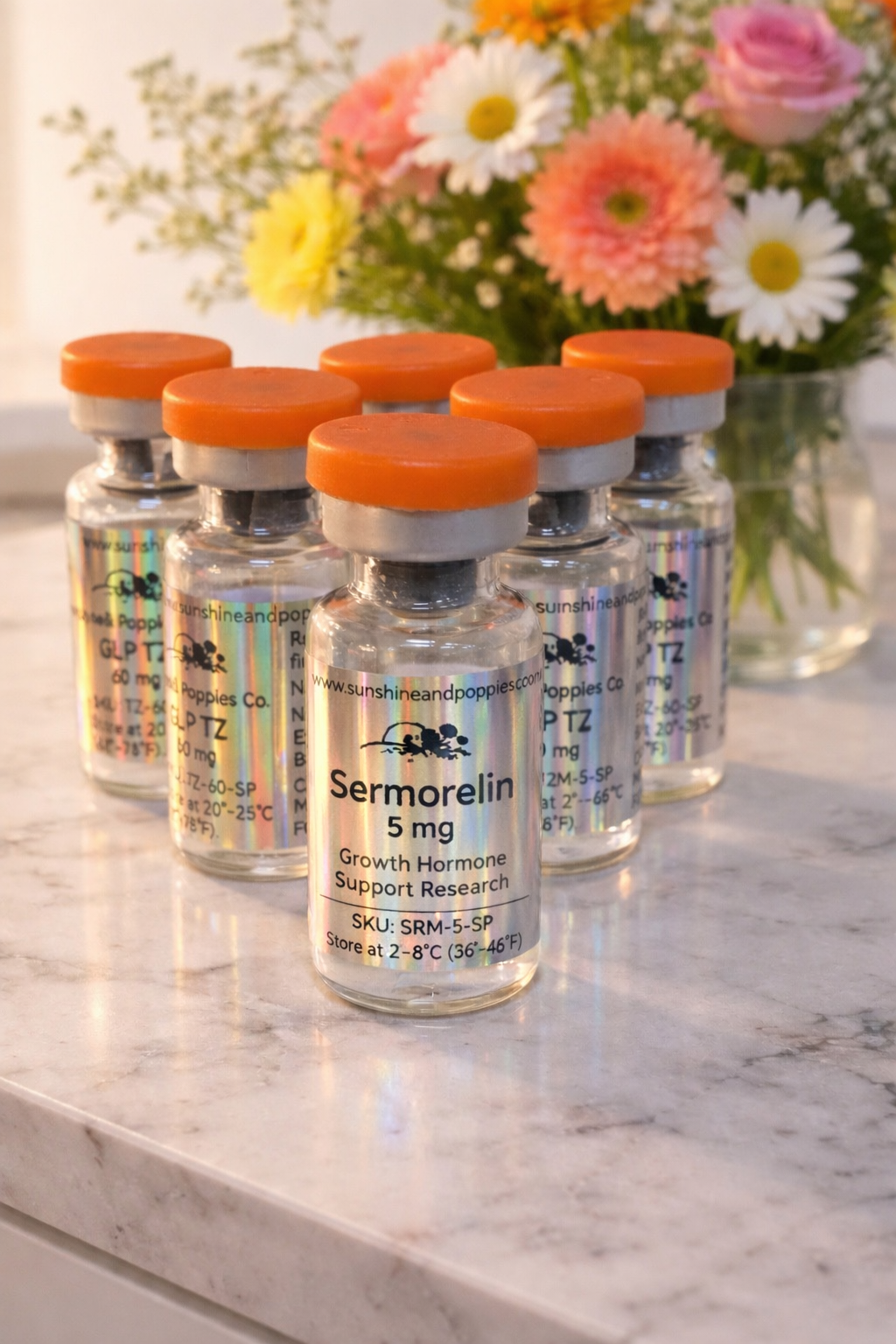
Sermorelin 5 mg
SERMORELIN 5MG — GHRH(1-29)
In 1985, Clark and Robinson published a finding in Nature that shaped the next four decades of growth hormone research: the first 29 amino acids of GHRH are all you need for full receptor activation. The remaining 15 C-terminal residues are biologically irrelevant (PubMed 2858818). That minimal active fragment is Sermorelin.
What makes Sermorelin particularly interesting as a research tool is what it does not do. Published studies report that it does not significantly affect prolactin, insulin, cortisol, glucose, or thyroid hormone levels in experimental systems. Changes are confined to the somatotropic axis (Prakash & Goa, BioDrugs, 1999; PubMed 18031173). That specificity makes it a clean tool for studying GH signaling without metabolic confounders.
SPECIFICATIONS
AMINO ACIDS29MOLECULAR FORMULAC149H246N44O42SMOLECULAR WEIGHT3357.93 g/molCAS NUMBER86168-78-7PUBCHEM CID16129620FORMLyophilized powder (acetate salt)APPEARANCEWhite to off-white powderAVAILABLE SIZES5mg and 10mg per vial
MECHANISM AND KINETICS
Sermorelin binds GHRH receptors on pituitary somatotrophs, triggering adenylate cyclase activation, cAMP accumulation, PKA phosphorylation, and GH vesicle release. Its circulating half-life is approximately 11-12 minutes — short compared to modified analogs like CJC-1295, but this actually produces a more physiologically representative pulsatile secretion pattern.
There is one property that sets Sermorelin apart from many receptor agonists: chronic exposure upregulates GHRH receptor production rather than causing desensitization (Garcia et al., Endotext/NCBI, 2019). Most receptor systems down-regulate under sustained agonism. This one does not.
KEY PUBLISHED FINDINGS
Khorram et al. documented GH enhancement of 82% within 2 hours and 107% over 16-week periods, with IGF-1 increases of roughly 28%. Body composition analysis showed a mean lean mass gain of 2.78 lbs (1.26 kg) with measurable changes in skin tissue thickness (J Clin Endocrinol Metab, 1997; PubMed 9141541).
Vitiello et al. examined cognitive outcomes in a cohort of 89 subjects aged 68-69, reporting observations related to WAIS performance metrics including IQ, picture arrangement, and verbal scores (Neurobiology of Aging, 2006; PubMed 16399214).
SERMORELIN VS CJC-1295
Both target the GHRH receptor but differ in staying power. Sermorelin is the unmodified 1-29 fragment (~11 min half-life). CJC-1295 No DAC has four amino acid substitutions for DPP-IV resistance (30 min to 2 hours). CJC-1295 with DAC adds albumin binding (6-8 days). The tradeoff is always the same: longer half-life means less pulsatile secretion. All three are available from Heritage Labs USA.
RESEARCH APPLICATIONS
GHRH receptor binding kinetics and affinity studies
Somatotroph signaling cascade characterization
Comparative GHRH analog pharmacology (Sermorelin vs CJC-1295 vs Tesamorelin)
Receptor desensitization vs upregulation research
GH pulsatility and secretion pattern analysis
QUALITY AND TESTING
Every batch undergoes independent third-party testing with mass spectrometry identity confirmation. Batch-specific COAs are available.
STORAGE
Lyophilized: -20°C for long-term stability
Reconstituted: 2-8°C, use within 30 days
Protection: Shield from light and moisture; avoid freeze-thaw cycles
REFERENCES
Clark RG, Robinson ICAF. “Growth induced by pulsatile infusion of an amidated fragment of human growth hormone releasing factor.” Nature. 1985;314(6008):281-283. PubMed 2858818
Khorram O, et al. “Two years of treatment with recombinant human growth-hormone releasing hormone.” J Clin Endocrinol Metab. 1997;82(5):1472-1479. PubMed 9141541
Prakash A, Goa KL. “Sermorelin: a review.” BioDrugs.1999;12(2):139-157. PubMed 18031173
Vitiello MV, et al. “Growth hormone releasing hormone improves the cognition of healthy older adults.” Neurobiol Aging.2006;27(2):318-323. PubMed 16399214
Garcia JM, et al. “Growth Hormone in Aging.” Endotext/NCBI.2019.
FREQUENTLY PAIRED WITH
Ipamorelin 5mg — Complementary GHS-R agonist for dual-pathway GH studies.
CJC-1295 No DAC — Extended-duration GHRH analog comparison.
For laboratory research use only. Not for human or veterinary use. Not a drug, food, or cosmetic.
SERMORELIN 5MG — GHRH(1-29)
In 1985, Clark and Robinson published a finding in Nature that shaped the next four decades of growth hormone research: the first 29 amino acids of GHRH are all you need for full receptor activation. The remaining 15 C-terminal residues are biologically irrelevant (PubMed 2858818). That minimal active fragment is Sermorelin.
What makes Sermorelin particularly interesting as a research tool is what it does not do. Published studies report that it does not significantly affect prolactin, insulin, cortisol, glucose, or thyroid hormone levels in experimental systems. Changes are confined to the somatotropic axis (Prakash & Goa, BioDrugs, 1999; PubMed 18031173). That specificity makes it a clean tool for studying GH signaling without metabolic confounders.
SPECIFICATIONS
AMINO ACIDS29MOLECULAR FORMULAC149H246N44O42SMOLECULAR WEIGHT3357.93 g/molCAS NUMBER86168-78-7PUBCHEM CID16129620FORMLyophilized powder (acetate salt)APPEARANCEWhite to off-white powderAVAILABLE SIZES5mg and 10mg per vial
MECHANISM AND KINETICS
Sermorelin binds GHRH receptors on pituitary somatotrophs, triggering adenylate cyclase activation, cAMP accumulation, PKA phosphorylation, and GH vesicle release. Its circulating half-life is approximately 11-12 minutes — short compared to modified analogs like CJC-1295, but this actually produces a more physiologically representative pulsatile secretion pattern.
There is one property that sets Sermorelin apart from many receptor agonists: chronic exposure upregulates GHRH receptor production rather than causing desensitization (Garcia et al., Endotext/NCBI, 2019). Most receptor systems down-regulate under sustained agonism. This one does not.
KEY PUBLISHED FINDINGS
Khorram et al. documented GH enhancement of 82% within 2 hours and 107% over 16-week periods, with IGF-1 increases of roughly 28%. Body composition analysis showed a mean lean mass gain of 2.78 lbs (1.26 kg) with measurable changes in skin tissue thickness (J Clin Endocrinol Metab, 1997; PubMed 9141541).
Vitiello et al. examined cognitive outcomes in a cohort of 89 subjects aged 68-69, reporting observations related to WAIS performance metrics including IQ, picture arrangement, and verbal scores (Neurobiology of Aging, 2006; PubMed 16399214).
SERMORELIN VS CJC-1295
Both target the GHRH receptor but differ in staying power. Sermorelin is the unmodified 1-29 fragment (~11 min half-life). CJC-1295 No DAC has four amino acid substitutions for DPP-IV resistance (30 min to 2 hours). CJC-1295 with DAC adds albumin binding (6-8 days). The tradeoff is always the same: longer half-life means less pulsatile secretion. All three are available from Heritage Labs USA.
RESEARCH APPLICATIONS
GHRH receptor binding kinetics and affinity studies
Somatotroph signaling cascade characterization
Comparative GHRH analog pharmacology (Sermorelin vs CJC-1295 vs Tesamorelin)
Receptor desensitization vs upregulation research
GH pulsatility and secretion pattern analysis
QUALITY AND TESTING
Every batch undergoes independent third-party testing with mass spectrometry identity confirmation. Batch-specific COAs are available.
STORAGE
Lyophilized: -20°C for long-term stability
Reconstituted: 2-8°C, use within 30 days
Protection: Shield from light and moisture; avoid freeze-thaw cycles
REFERENCES
Clark RG, Robinson ICAF. “Growth induced by pulsatile infusion of an amidated fragment of human growth hormone releasing factor.” Nature. 1985;314(6008):281-283. PubMed 2858818
Khorram O, et al. “Two years of treatment with recombinant human growth-hormone releasing hormone.” J Clin Endocrinol Metab. 1997;82(5):1472-1479. PubMed 9141541
Prakash A, Goa KL. “Sermorelin: a review.” BioDrugs.1999;12(2):139-157. PubMed 18031173
Vitiello MV, et al. “Growth hormone releasing hormone improves the cognition of healthy older adults.” Neurobiol Aging.2006;27(2):318-323. PubMed 16399214
Garcia JM, et al. “Growth Hormone in Aging.” Endotext/NCBI.2019.
FREQUENTLY PAIRED WITH
Ipamorelin 5mg — Complementary GHS-R agonist for dual-pathway GH studies.
CJC-1295 No DAC — Extended-duration GHRH analog comparison.
For laboratory research use only. Not for human or veterinary use. Not a drug, food, or cosmetic.